Tasmania's transport, postal, and warehousing industry is crucial for the flow of people and goods within the state and to and from other destinations.
This significant industry employs thousands of Tasmanians and serves as the foundation for many sectors, from agriculture to tourism.
The transport, postal and warehousing industry encompasses a diverse range of businesses essential for moving people and goods.
This sector includes passenger transport services like taxis and luxury car hire, as well as the freight of goods by road, rail, water or air.
It also covers postal and courier services for pick-up and delivery, scenic and sightseeing transport and all activities related to warehousing and storage.
Useful market information:
The Tasmanian transport, postal and warehousing industry increased by 0.2% in 2024-25 to $1.78 billion in gross value added terms.
Over the past 10 years, this industry in Tasmania has experienced a compound annual growth rate of 3.3%.
It comprises 4.4% of total Tasmanian industry gross value added, and has increased over the past 10 years.
Transport, postal and warehousing contribution to Gross State Product
Source: Australian Bureau of Statistics - Australian National Accounts: State Accounts
In the 12 months to February 2026
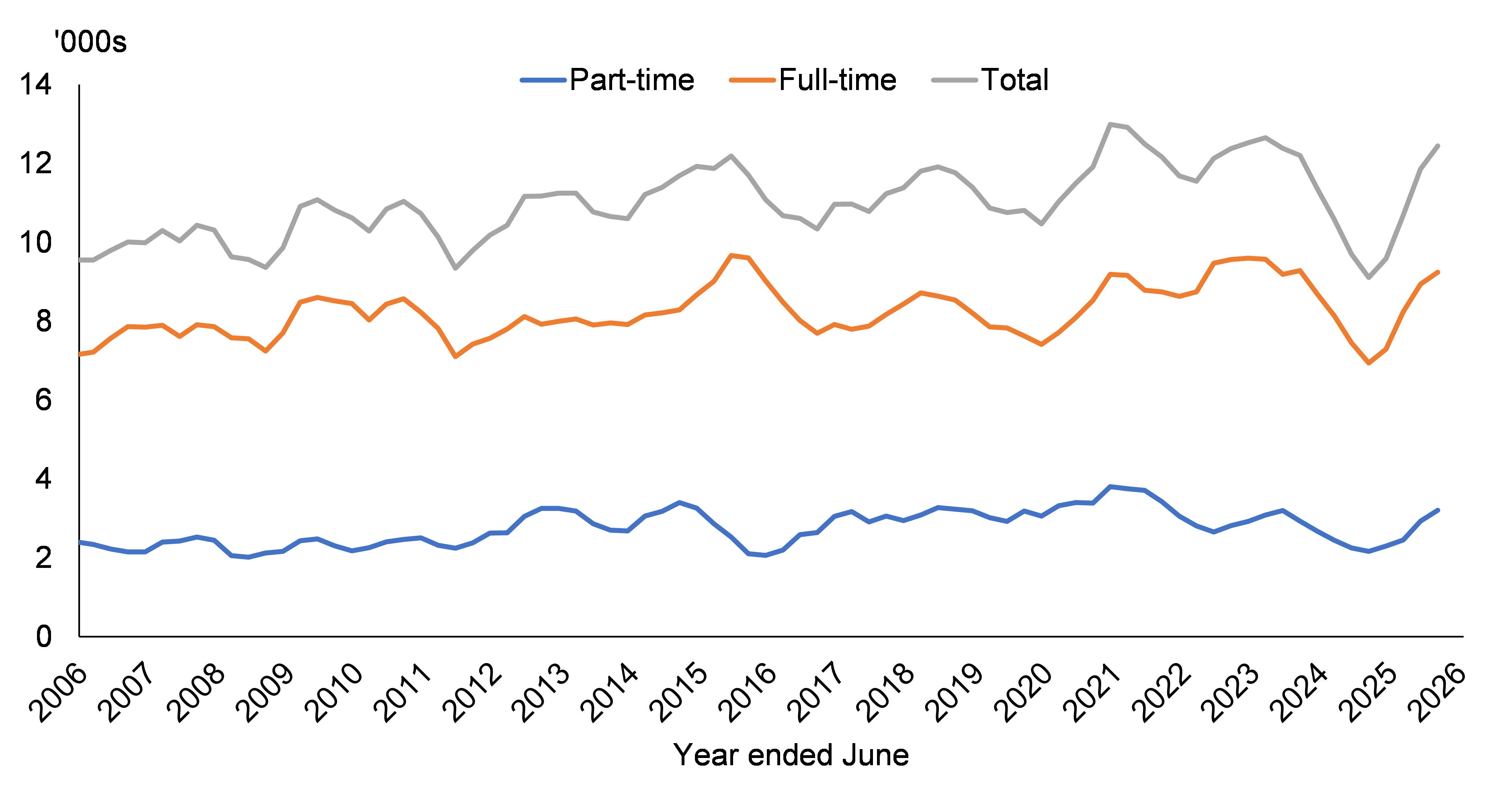
Total employment in the Tasmanian transport, postal and warehousing industry increased by 36.7% to 12,400 persons.
Full-time employment increased by 33.1% to 9,200 persons.
Part-time employment increased by 48.2% to 3,200 persons.
Transport, postal and warehousing employment level
Source: Australian Bureau of Statistics – Labour Force, Detailed
Between June 2024 and June 2025:
The total number of operating businesses in the Tasmanian transport, postal and warehousing industry increased by 2.3% to 3,533.
The total number of operating small businesses (0-19 employees) increased by 2.2% to 3,464.
Transport, postal and warehousing – number of operating businesses:
Source: Australian Bureau of Statistics – Counts of Australian Businesses
Transport and logistics support services:
Providing essential transport services, vehicle registration, licensing, public transport and road safety initiatives while supporting infrastructure development and policy planning to improve mobility and strengthen connectivity across the state.
Represents the interests of transport operators, freight forwarders and shippers, driving industry improvements and shaping policy development, delivering essential resources and fostering collaboration and providing strategic support to strengthen Tasmania’s transport and logistics sector.
Providing financial assistance for moving eligible non-bulk goods and passenger vehicles by sea, helping to offset freight costs.
Programs like the Tasmanian Freight Equalisation Scheme and Bass Strait Passenger Vehicle Equalisation Scheme support businesses and individuals with transport and logistics cost relief.
The national air navigation service provider, managing air traffic control, aviation rescue and fire-fighting services and ensuring safe and efficient airspace operations, supporting airlines, airports and the broader aviation industry.
Overseeing Australia's transport systems, vehicle regulations and infrastructure development to ensure safety, efficiency, and sustainability, providing policies, funding programs and compliance guidelines for road, maritime, and aviation sectors.
Encouraging investment in the shipping industry and supporting employment opportunities. Incentives include exemptions on qualifying shipping income, accelerated depreciation for vessels and tax offsets for seafarer employers.
The national transport safety investigator, conducting independent investigations into aviation, marine, and rail incidents to improve safety and providing reports, safety recommendations and data analysis to enhance transport systems and prevent future accidents.
Advocating for the trucking industry, promoting safety, sustainability, and efficiency in freight transport and providing resources, policy guidance and industry programs to support operators and improve national transport standards.
Regulating aviation safety in Australia, overseeing pilot licensing, aircraft registration, and airspace management, they ensure compliance with safety standards, provide educational resources and collaborate with industry stakeholders to maintain secure aviation operations.
Representing the interests of livestock transporters in Tasmania, providing industry advocacy, support, and guidance on regulatory matters by working with government and industry stakeholders to ensure safe, efficient, and responsible livestock transport across the state.
The national peak body representing Australia's maritime industry, advocating for strong, sovereign maritime capability and providing policy guidance, industry intelligence and strategic support to ensure a competitive and sustainable maritime sector.
Representing Australia's road freight industry, advocating for policy improvements and supporting transport operators and providing resources, expert advice and networking opportunities to enhance safety, efficiency and sustainability in the sector.