Tasmania's manufacturing industry is a cornerstone of our economy and a symbol of innovation.
We transform raw materials into high-quality products that reflect our craftsmanship and technological progress.
Tasmania's manufacturers are creating high-quality goods that are sought after locally and around the globe.
Across the state we have an incredibly diverse manufacturing landscape with businesses dedicated to creating and processing a wide array of products.
This includes everything from food and beverages, textiles and furniture, to heavy industry products like machinery and equipment and even specialised goods like drones and timber and mineral products.
The sector also encompasses traditional industries such as wood and paper, metal and plastics and printed goods as well as niche areas like maritime equipment and chemical products, truly showcasing the impressive versatility of our local economy.
Useful market information:
Across Tasmania we've put a lot of focus on keeping our local manufacturing strong.
This helps us ensure we can make some of the things we need right here at home so we're not caught off guard by problems with global trade or supply chains.
Tasmanian manufacturers are resilient and adaptable, holding up well and operating effectively despite the changing economic environment:
Manufacturing decreased by 4.1% in 2024-25 to $2.151 billion in gross value-added terms.
The decrease in the manufacturing industry is consistent with the national trend since about 2008 however Tasmania has become, and continues to strengthen as, a key competitor in advanced manufacturing.
Over the past 10 years the value of the Tasmanian manufacturing industry has experienced a compound annual decline rate of 2.3%.
The Tasmanian manufacturing industry comprises 5.3% of total Tasmanian industry gross value added and has decreased over the past 10 years.
Manufacturing contribution to Gross State Product
Source: Australian Bureau of Statistics - Australian National Accounts: State Accounts
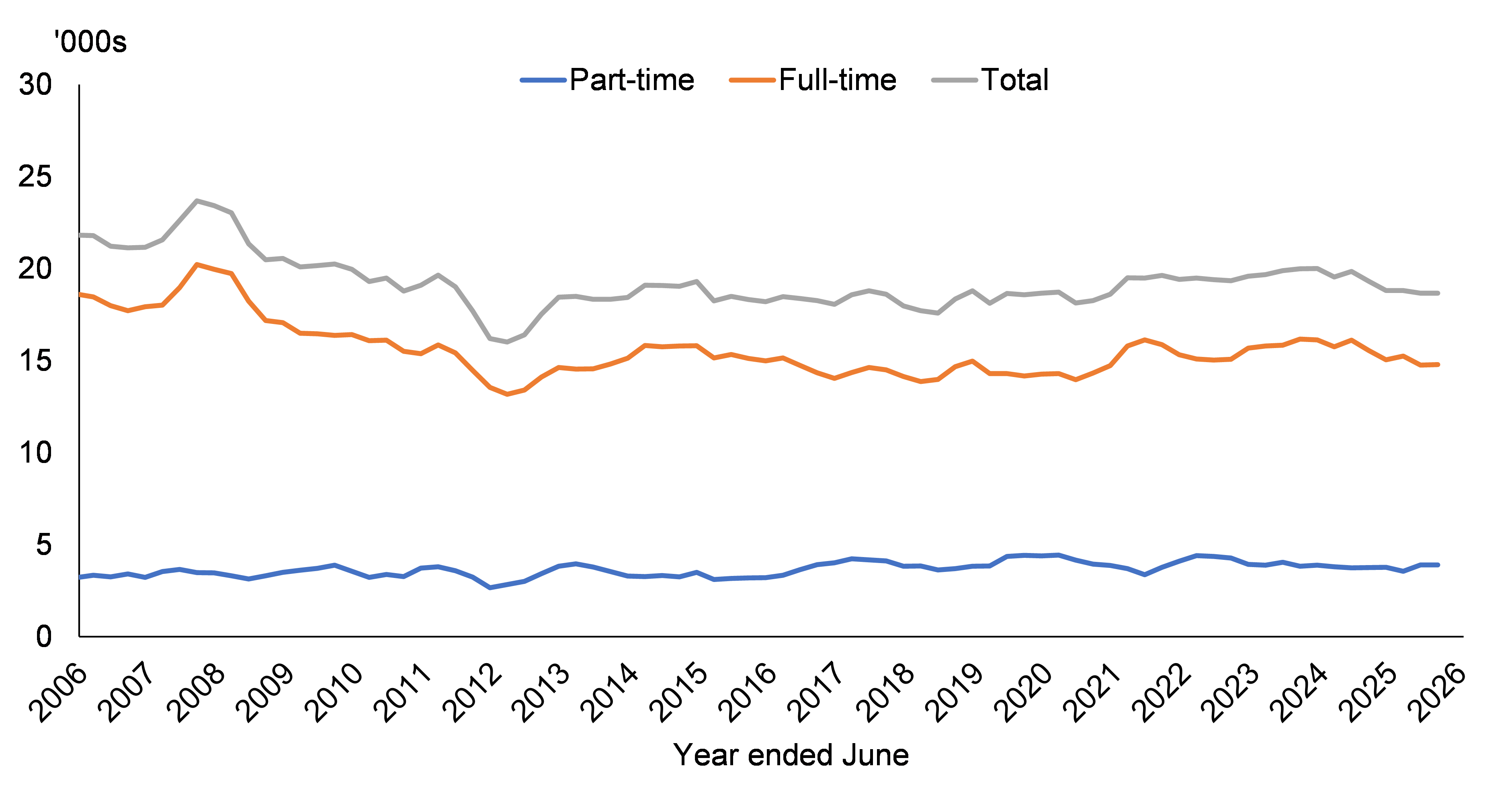
In the 12 months to February 2026
Total employment decreased by 3.3% to 18,700 persons.
Full-time employment decreased by 5.0% to 14,800 persons.
Part-time employment increased by 3.6% to 3,900 persons.
Similar to the gradual fall in total value of the manufacturing industry, falling employment is consistent with the national performance.
Manufacturing employment level
Source: Australian Bureau of Statistics - Labour Force, Detailed
Between June 2024 and June 2025
The total number of operating businesses decreased by 1.9% to 1,894.
The total number of operating small businesses (0-19 employees) decreased by 0.9% to 1,718.
Manufacturing – number of operating businesses:
Source: Australian Bureau of Statistics – Counts of Australian Businesses
Manufacturing support services:
Supporting innovation and growth in the state’s manufacturing sector.
Helping businesses adopt new technologies, improve productivity and compete globally through industry development programs and strategic initiatives.
Helping manufacturers stay compliant with Australian laws by providing essential guidance on workplace health and safety (WHS), licensing and regulation.
The website has some great resources for simplifying complex rules, ensuring businesses meet industry standards, operate safely and maintain efficiency.
The Australian Government supports manufacturers through investment programs, industry development initiatives and strategies to enhance global competitiveness.
Supporting workforce development in Australia’s manufacturing sector, focusing on training, industry collaboration and skills development to ensure businesses have access to a skilled workforce and can compete globally.

 Source: Australian Bureau of Statistics - Australian National Accounts: State Accounts
 Source: Australian Bureau of Statistics - Labour Force, Detailed