In Tasmania our building and construction sector is a cornerstone of our economy.
It includes everything from homes and impressive commercial spaces to the essential infrastructure that keeps our state running.
This sector is made up of tradespeople who provide their services directly to individual customers, businesses and the government.
It also includes businesses that handle both small and large construction projects and companies that specialise in significant construction and infrastructure projects that shape our state for the future.
Useful market information:
The construction industry decreased by 3.5% in 2024-25 to $3.041 billion in gross value-added terms.
Over the past 10 years, the construction industry has experienced a compound annual growth rate of 1.7%.
The construction industry comprises 7.6% of total Tasmanian industry gross value added.
Construction contribution to Gross State Product
Source: Australian Bureau of Statistics - Australian National Accounts: State Accounts
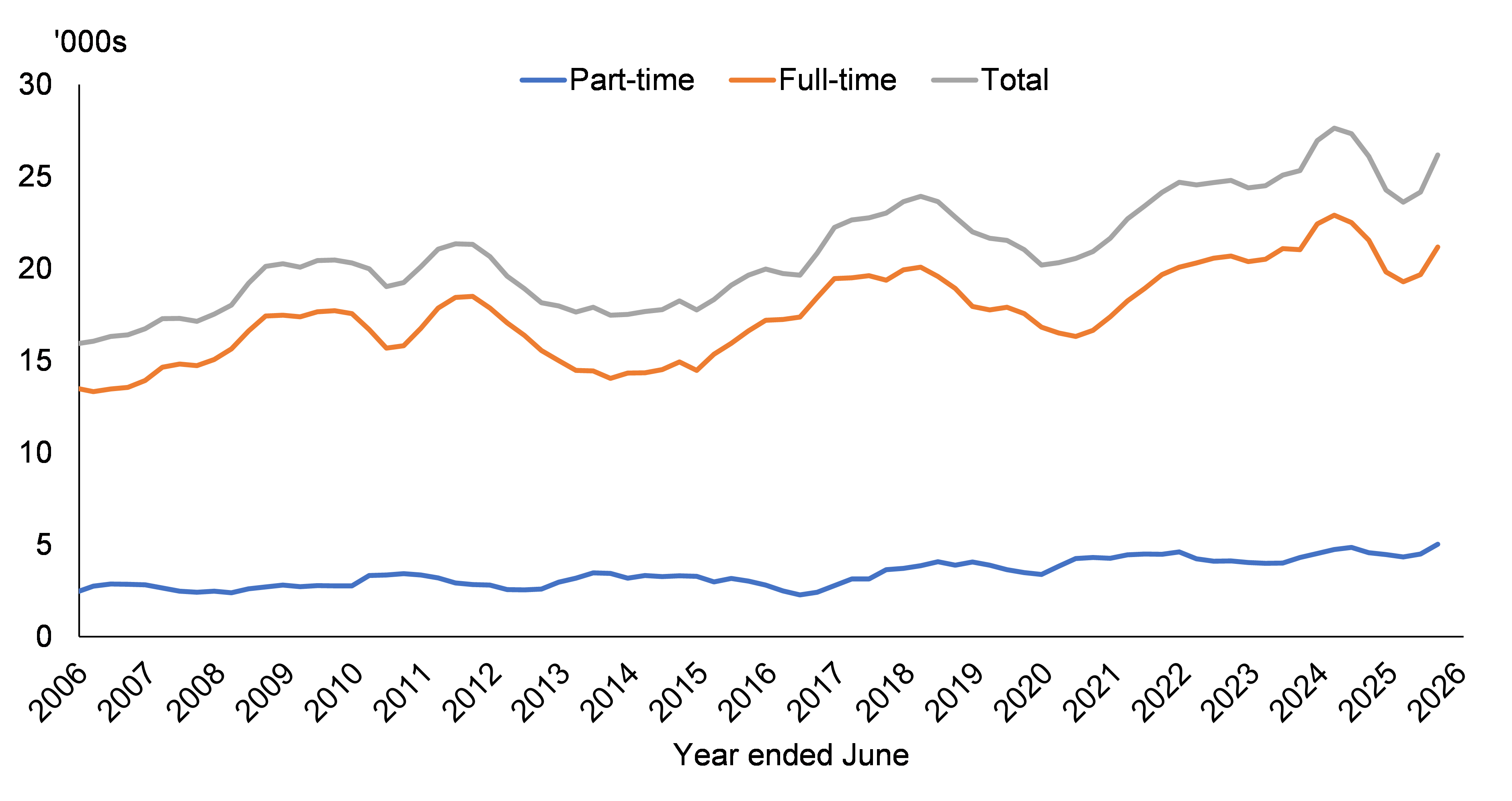
In the 12 months to February 2026
Total employment increased by 0.3% to 26,200 people.
Full-time employment decreased by 1.8% to 21,200 people.
Part-time employment increased by 9.9% to 5,000 people.
Construction employment level
Source: Australian Bureau of Statistics – Labour Force, Detailed
Tasmanian construction work has been driven by civil engineering work such as road and bridge projects over recent years, with other non-residential construction also contributing.
Over the past four years residential construction work has been gradually declining from a recent peak in activity reflecting cost-of-living pressures.
Tasmanian construction work done
Source: Australian Bureau of Statistics – Construction Work Done, Australia, Preliminary
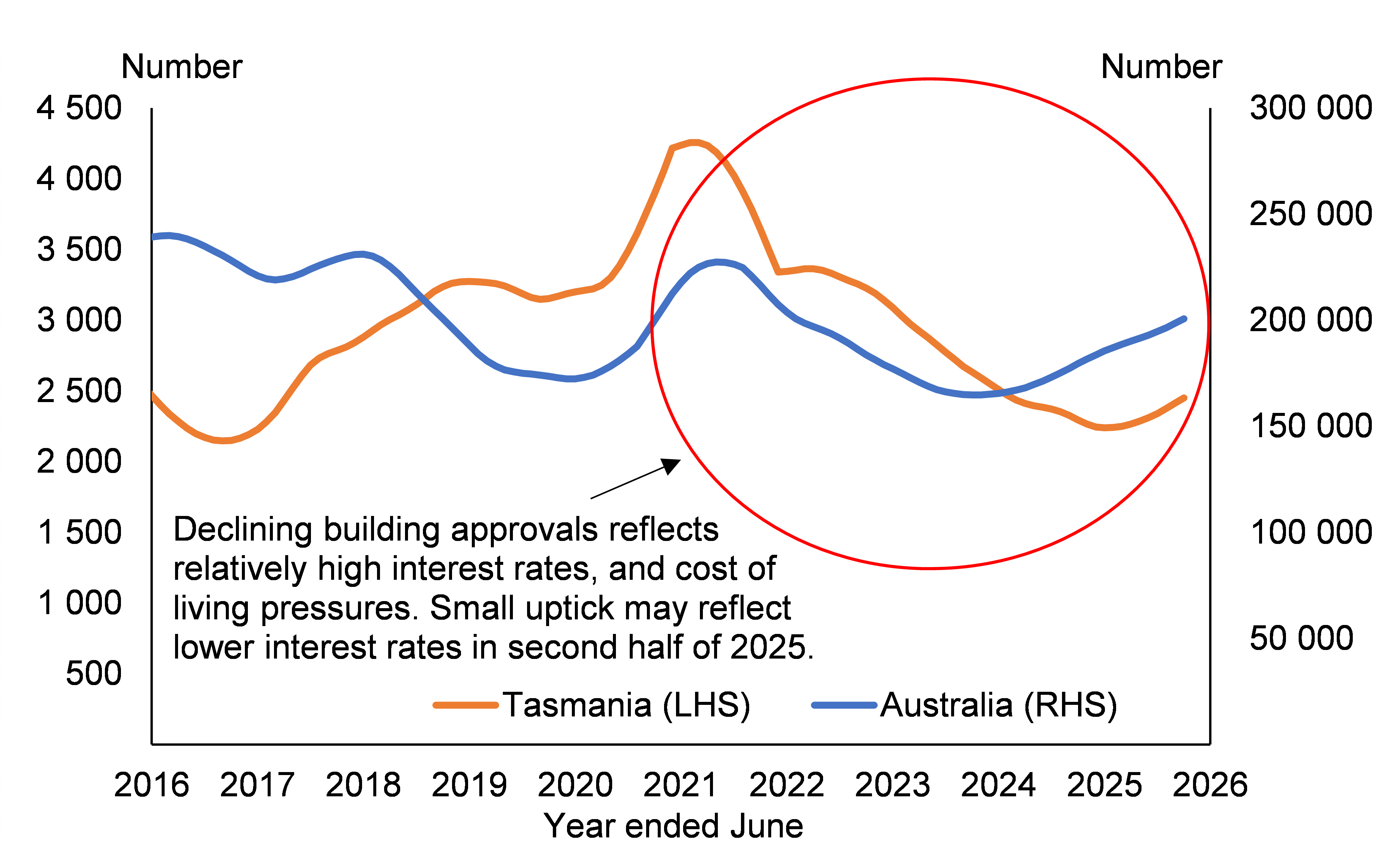
Tasmanian building approvals had been declining for most of the period since 2021 reflecting relatively high interest rates and cost of living pressures.
Tasmanian building approvals have rebounded slightly since mid-2025.
Nationally, building approvals experienced a period of decline similar to Tasmania before showing signs of a rebound since mid-2024.
Building approvals, 12-month moving total
Source: Australian Bureau of Statistics, Building Approvals
Building and construction sector support services:
Regulating building, consumer rights and occupational licensing in Tasmania and providing guidance on tenancy, construction standards and business practices to ensure fair and safe transactions for residents and businesses.
The peak body representing Tasmania’s civil construction industry, advocating for infrastructure development, supporting workforce training and helping businesses grow within the sector.
The peak body representing Australia’s residential building industry, providing advocacy, research and support to builders, suppliers and tradespeople, helping to shape housing policy and promote sustainable construction practices.
The peak industry association representing Tasmania’s building and construction sector, supporting businesses with advocacy, training and industry development programs and helping builders and contractors maintain high standards and grow within the industry.
The peak industry association representing electrical contractors, supporting businesses through advocacy, training, technical and safety advice that help members maintain high standards and grow their business.
The peak body representing Tasmania’s plumbing industry, supporting contractors with advocacy, training and industry development, ensuring high standards in plumbing services and environmental sustainability.
Providing training and career opportunities in the electrical industry, offering apprenticeships, traineeships and short courses to help individuals upskill and advance their careers in electrical fields.
Supporting workforce development in the building and construction industry, providing training, funding and support to help businesses and workers build skills, improve safety and strengthen the sector.
The leading professional body for building and construction management in Australia, promoting excellence, education and ethical standards in the industry and supporting professionals through advocacy, training and industry recognition.
Ensuring workers and employers in the building and construction industry understand their rights and obligations under workplace laws, providing guidance on pay rates, entitlements and dispute resolution to promote fair and safe working conditions in the sector.
Responsible for administering Tasmania’s portable long service leave scheme for the building and construction industry. Businesses operating in the Tasmanian industry are required to register with TasBuild. Employers must also register all workers engaged to perform construction work, including full-time, part-time and casual employees, labour hire workers and labour-only subcontractors.

 Source: Australian Bureau of Statistics - Australian National Accounts: State Accounts